
AI Operating Systems Are Replacing AI Demos: What Build 2026 Means for Gulf Teams
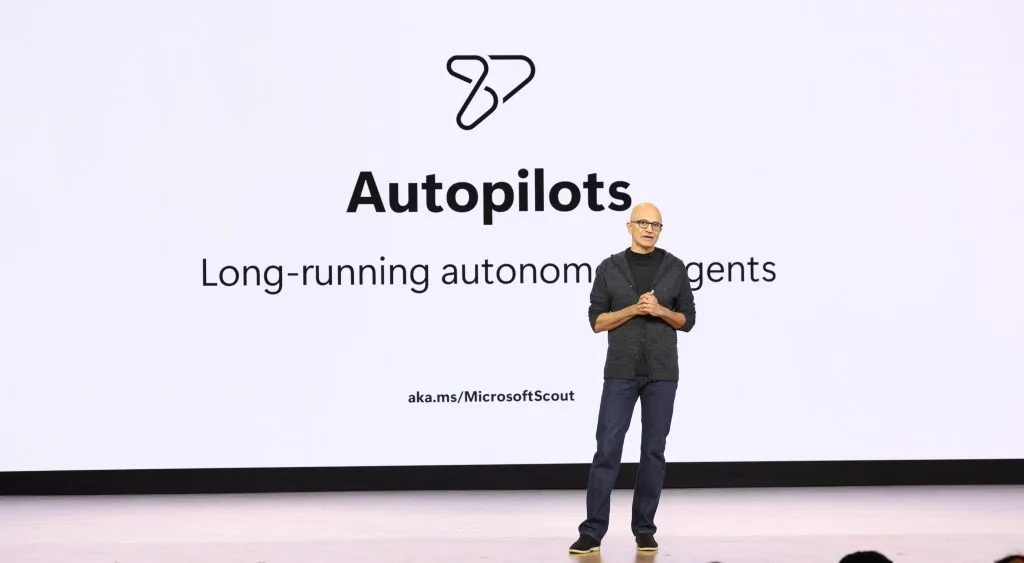
AI strategy is changing shape again. The important question is no longer whether a team can plug a model into a workflow. The harder and more valuable question is whether that workflow has the right context, boundaries, observability, and business ownership to survive outside the demo environment.
That is why the first half of June 2026 matters. Microsoft Build 2026 made a strong case that AI value now depends on the system around the model: context layers, local execution options, policy controls, and production security. In parallel, recent UAE announcements show that this same logic is becoming institutional in the region. For founders, operators, and technical teams, the message is clear: AI is becoming an operating model.
Build 2026 was about the system, not just the model
The headline from Microsoft Build was not simply bigger model capability. Microsoft’s June 2 Build 2026 overview emphasized Microsoft IQ as a context layer for agents across GitHub Copilot, Microsoft Foundry, and Copilot Studio. That matters because the next enterprise bottleneck is rarely raw intelligence alone. It is whether an agent can reach the right knowledge, understand work context, and act without losing control.
The broader Microsoft Build 2026 news hub reinforced the same direction: agent systems, local development paths, new model families, and platform updates all pointed toward production readiness rather than prototype novelty. The same week, Microsoft’s Windows platform security for AI agents announcement pushed the conversation further into guardrails, describing execution boundaries and policy-based controls for local and enterprise AI agents.
Taken together, these announcements suggest a more mature AI stack. In 2024 and 2025, many companies focused on prompts, copilots, and quick experiments. In June 2026, the center of gravity has shifted toward runtime control, secure tool use, and context orchestration. That is a meaningful step forward for any business that wants agents to do real work instead of isolated tasks.
Why this matters for Gulf companies now
This is not just a Silicon Valley platform story. The UAE is signaling that AI adoption in the region is increasingly tied to governance and operating readiness. On June 9, the Dubai Media Office highlighted a Dubai Future Foundation and IBM study showing that around 20% of organisations in the UAE are already implementing AI governance platforms, compared with 12% globally. That gap matters because it suggests local organisations are moving faster from experimentation to control layers.
Then on June 11, the Dubai Media Office reported that Dubai’s Agentic AI transformation programme aims to empower 295,000 companies, develop and deliver 100 specialised AI assistants over the next two years, and support the establishment of 50 Agentic AI companies. Whether every company moves at the same pace is not the point. The point is that the regional direction is now explicit: AI is expected to be organised, specialised, and economically useful.
For Gulf-based startups and growth-stage companies, this creates both pressure and opportunity. Pressure, because ad hoc AI usage will start to look weak compared with governed operating models. Opportunity, because smaller teams can still win if they design their AI stack with discipline early instead of patching governance in later.
What founders, operators, and technical leaders should do next
1. Treat context as infrastructure. Most AI failures in production come from bad context, not bad marketing claims. Decide which internal systems matter, how agents retrieve information, and how context quality is measured before scaling usage.
2. Separate agent permission from agent capability. A capable model is not the same thing as a trustworthy actor. If an agent can search, update, approve, or trigger workflows, define explicit scopes and logs first. Security and operations teams need to be part of the architecture, not an afterthought.
3. Start with specialised assistants, not universal assistants. Dubai’s own framing around specialised assistants is a useful signal. Narrow assistants tied to one workflow, team, or data boundary are easier to monitor, cheaper to run, and faster to prove valuable.
4. Design for observability from day one. Track latency, failure rates, fallback usage, hallucination patterns, and business outcomes together. AI incidents are usually system incidents that span retrieval, permissions, prompts, and downstream actions.
5. Align the AI roadmap with a business owner. If an AI workflow reduces support load, improves proposal speed, or accelerates compliance review, someone should own that outcome in the business. Without ownership, AI stays in the lab.
The Qomra Tech angle
The strongest companies in the next wave of AI adoption will not be the ones with the most tools. They will be the ones with the cleanest operating model: strong context, narrow permissions, measurable outcomes, and a clear decision about what should run locally, privately, or through external platforms.
Qomra Tech readers should read Build 2026 and the latest UAE signals as one combined message. The market is moving past generic AI enthusiasm. What matters now is whether your team can turn AI into governed, revenue-linked, production-grade work.
If your roadmap still treats AI as a sidecar feature, this is the week to upgrade the plan. The next competitive edge will come from building the operating system around the agent, not from chasing the loudest model announcement.
Sources: Microsoft Build 2026 overview, Microsoft Build 2026 news hub, Windows platform security for AI agents, DFF and IBM study on UAE AI governance adoption, Dubai Higher Committee update on Agentic AI transformation.