AI Agents Are Entering the Physical World. Your Safety Model Must Follow
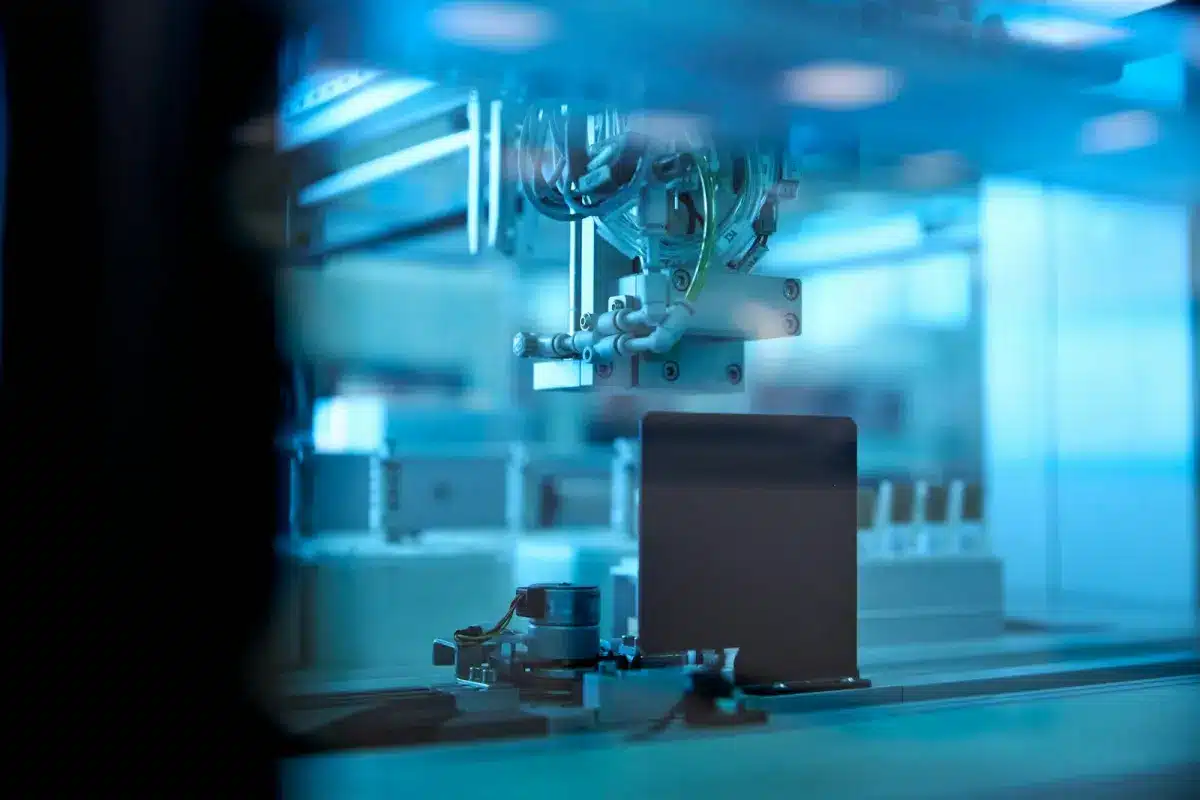
AI agents are beginning to leave the browser and touch the physical world. On 27 August, Anthropic opened a research preview of the Model Hardware Standard (MHS), a proposed common interface for agents to discover and operate programmable devices. Its early targets include microscopes, liquid handlers, robotic arms and quantum-computing equipment.
The headline is not that a chatbot can move a robot arm. Industrial automation has done that for decades. The important change is that a reasoning system may now coordinate different machines, interpret changing conditions and select the next action through one shared layer. That can compress integration work and make smaller-batch automation economical. It also moves AI mistakes from a document or database into a world of heat, pressure, motion, chemicals and people.
For founders, operators and technical teams, MHS is an early signal: physical AI needs a safety architecture before it needs a clever demo.
What MHS actually changes
Most equipment exposes a vendor-specific interface. Connecting three instruments often means writing and maintaining three integrations, then building orchestration logic above them. Anthropic says MHS replaces part of that work with a standardized driver. Simple primitives such as read and write expose device state and permitted changes, while descriptive tags tell an agent what the device can measure, what it can adjust and which limits must be enforced.
The standard is model-agnostic and can be reached through mechanisms including the Model Context Protocol, command-line tools and APIs. In early trials, agents coordinated lab instruments, adapted liquid-handling parameters and created deterministic scripts after exploring a task. Anthropic reports that integration work that can take weeks or months may fall to hours or minutes, although this is an early research preview rather than a finished, open specification.
TechRadar’s 1 September coverage highlights the same architectural shift: a common driver lets equipment communicate consistently and lets agents discover compatible machines without a custom software bridge for every pairing.
The safety boundary cannot live in the prompt
A language model should never be the final authority on whether a machine may cross a physical limit. Prompts are useful for intent; they are not safety interlocks. A production design needs multiple independent layers, with the most important constraints enforced below the agent.
- Device contract: publish units, valid ranges, rate limits, calibration state and prerequisites in a machine-readable schema. Reject ambiguous values rather than guessing.
- Hard interlocks: preserve emergency stops, guards, pressure limits and controller-level protections that cannot be overridden by the model or orchestration service.
- Scoped authority: issue short-lived credentials for a named device, action and time window. Reading a temperature must not imply permission to change it.
- State verification: confirm the machine’s real state before and after every consequential action. Treat stale telemetry as a stop condition.
- Human approval: require a qualified operator for first-of-kind procedures, hazardous materials, irreversible actions and any move outside a validated envelope.
- Independent shutdown: the monitoring and stop path must remain available even if the agent, model provider or network fails.
This principle aligns with established robotics practice. ISO 10218-1:2025 treats safe robot design, foreseeable misuse and risk reduction as system requirements. Adding an AI planner does not replace those obligations; it introduces a new source of variable behaviour that must be contained by them.
Treat every driver as safety-critical software
A shared interface can reduce integration effort, but it can also create a larger blast radius. A unit conversion error, an incorrect device description or a compromised driver could affect every workflow that trusts it. Teams should apply the same discipline they use for payment, medical or control software.
Version every device definition. Sign driver releases. Test boundary values and failure modes. Keep a software bill of materials. Separate development, simulation and production credentials. Record the request, model decision, policy result, device command, sensor response and operator intervention in one trace. If the organisation cannot reconstruct why a command was allowed, it cannot operate the system responsibly.
The NIST AI RMF Playbook offers a useful operating rhythm: govern, map, measure and manage. For physical AI, that means mapping hazards and responsible owners before deployment, measuring performance under abnormal conditions, and defining a clear response when behaviour moves outside expectations.
A practical pilot for UAE teams
The opportunity is particularly relevant in the Gulf, where manufacturing, logistics, energy, healthcare and research infrastructure are expanding quickly. The UAE Ministry of Industry and Advanced Technology’s Industrial Technology Transformation Program encourages manufacturers to adopt Industry 4.0 capabilities and provides readiness, incentive and enablement initiatives. Physical AI can fit that direction, but the first project should be narrow and measurable.
- Choose an advisory workflow first. Let the agent observe telemetry, detect anomalies and recommend an action without controlling equipment.
- Create a digital twin or simulator. Replay normal operations, sensor faults, network delay, conflicting commands and unsafe requests.
- Define the operating envelope. Name the allowed devices, commands, ranges, hours, materials and operator roles. Everything else is denied.
- Add staged autonomy. Move from recommendation to supervised execution, then to bounded automation only after predefined evidence thresholds are met.
- Measure outcomes and near misses. Track integration time, intervention rate, rejected unsafe commands, recovery time, quality and downtime—not only task completion.
A good first production case is reversible, observable and low-energy: adjusting a non-critical test fixture, routing samples in a controlled lab, or changing a set point inside a tightly constrained band. A poor first case has people in the motion envelope, hazardous chemistry or a large consequence from one incorrect value.
What leaders should decide now
MHS may evolve substantially before it becomes open source, and other standards may compete with it. The strategic decision is therefore not “adopt MHS everywhere.” It is to make equipment interfaces portable while keeping safety, identity, policy and audit controls independent of any one model or protocol.
Qomra Tech’s recommendation is to separate four layers: the agent that plans, the policy service that authorizes, the driver that translates, and the controller that enforces physical limits. This separation keeps innovation fast without asking a probabilistic model to become a safety system.
The physical-AI era will be won by teams that make autonomy boring: constrained commands, verified state, complete traces and a dependable stop button. The shared interface is only the beginning.